1Day, 1 Hour, 1 bulb. Fight climate change with the flip of a switch!
Lights Out San Francisco is a citywide energy conservation event on March 29, 2008. On this night, they are trying to invite the entire city of San Francisco to install one compact fluorescent light bulb (CFL) and turn off all non-essential lighting for one hour.
According to estimates, turning the lights out in San Francisco for even one hour could save as much as 15 percent of the energy consumed on an average Saturday night.
Register on their website or give them a call at 1-415-643-LOSF for more information.
Showing posts with label green living. Show all posts
Showing posts with label green living. Show all posts
Friday, February 29, 2008
Monday, October 29, 2007
Finally.. the Scoop on Where to Shop (Part of The Fall Eco-Fashion Series.. )

After two serious posts on cotton and bamboo, finally, the scoop on where to shop. Here are some of eco-friendly adult and baby clothing, home goods manufacturers and retailers that I loved. Something to think about with the gift buying season coming up.
Haute Couture for the Fabulous Fashionista
Oscar de la Renta and Kate O’Connor, Linda Loudermilk, Summer Rayne Oakes, Amanda Shi of Avita
For the Concious Casual Dresser
Cotton field USA: Clothing thats a 100% pesticide free, chemical free and latex free. They offer lovely natural shades of brown, beige and sage with a variety of eco-dyed shades.
Chopper Couture just to show you how far this eco-fashion thing has seeped into all nooks and crannies of our society. Eco-designer Irene Zingenberg of Chopper Couture is hoping to demonstrate that beneath the rough chopper chick exterior and is a luxuriously soft eco-friendly chick. Chopper Couture is based in Toronto, Canada and has more than 100 stores retail Chopper Couture across Canada and the U.S.
Rawganique: Organic hemp, cotton and linen products with delivery in the US. Check out their organic v-neck cotton T-shirts
Hempys: American manufacturer and worldwide distributor of clothing and accessories made from sustainable materials including hemp, organic cotton, recycled cotton and recycled synthetics.
Other clothing manufacturers Bamboosa, Shirts Of Bamboo, HTnaturals
For the Baby
Organic wear USA: they offer beautiful organic baby gift sets, organic baby throws, blankets, toys, cute baby socks or any other gifts. All their our baby clothing and gifts are made with 100% certified organic cotton and come in beautiful natural colors
Sage Creek Naturals: Organic cotton baby clothes, organic bedding, and gifts
For the Home
The Bamboo Revolution.
Screen printing
T.S. Designs: Their REHANCE screen printing process avoids using plastisol inks.
QuantumOne from Wilflex is another non-PVC and non-phthalate plastisol screen printing ink that has similar look, feel and characteristics of conventional plastisol screen printing systems.
The European T-Shirt Factory is an interesting green printing story with a strong … and sincere … sustainability focus supported by ethical workplace policies for their employees. For their large commercial clients like Nike, Adidas, Polo and Wal-Mart (of course), the European T-Shirt Factor does everything from the knitting of tee shirts using certified organic cotton on tubular knitting machines, to eco-friendly screen printing on the finest commercial screen print equipment, to packaging (including bar coding, tagging and bagging), to distribution directly to their retail stores. Besides screen printing, the European T-shirt Factory also does apparel embroidery in its Egyptian facility.
Happy Shopping !
Thursday, October 25, 2007
Lucky Bamboo (Part of The Fall Eco-Fashion Series.. )
 What do conventional fashion designers Oscar de la Renta and Kate O’Connor, eco-fashion designers Amanda Shi of Avita, home furnishings manufacturers The Bamboo Revolution and clothing manufacturers Bamboosa, Shirts Of Bamboo, HTnaturals have in common? Bamboo.
Bamboo is making waves throughout the fashion industry because of its smooth texture, gentle drape, exquisite softness and and easy price when compared to silk and cashmere. And, not to forget why it gets a whole post on this blog– because of its eco friendly cachet.
After my research, all I have to say is that most of the hoopla is justified.
Growing bamboo is a wonderfully beneficial plant for the planet and is even more beneficial when growing organic bamboo. Botanically, bamboo is is classified as a grass and not a tree. It is the fastest growing grass and can shoot up a yard or more a day. Bamboo reaches maturity quickly and is ready for harvesting in about 4 years. Bamboo does not require replanting after harvesting because its vast root network continually sprouts new shoots which almost zoom up while you watch them, pulling in sunlight and greenhouse gases and converting them to new green growth. And bamboo does this the natural way without the need for petroleum-guzzling tractors and poisonous pesticides and fertilizers. With all of that, bamboo just might be the world’s most sustainable resource.
Newer manufacturing facilities have begun using other technologies to chemically manufacture bamboo fiber that are more benign and eco-friendly. The latest in nano-technologies are being introduced into the bamboo clothing industry.
Be sure to check out their slumber gear; my personal favorite. Their blankets prevent static electricity buildup, so no more snap, crackle, pop of wintery shocks when using the fleece in the chilly winter.
Greenyarn’s eco-fabric is promoted as being anti-bacterial, anti-fungal, anti-static, de-odorizing, breathable, thermal regulating (cool in hot weather and warm in cool weather), and environmentally friendly.
What's special about Bamboo?
- Bamboo clothing is easy to launder
- Because of the smooth and round structure of its fibers, bamboo clothing is soft and non-irritating, even to sensitive skin.
- Bamboo is naturally anti-bacterial and anti-fungal
- Bamboo clothing is hypoallergenic
- Bamboo fabric has a natural sheen and softness that feels and drapes like silk but is less expensive and more durable
Bamboo the plant as well as bamboo the fabric get a 5 star on being environmentally friendly!
Wednesday, October 24, 2007
Cotton - From Field to Fashion (Part of The Fall Eco-Fashion Series..)
 In conversations that I've had before I researched organic clothing I often used the term “natural clothing” to refer to organic clothing because the clothing is completely natural and was not grown with any toxic chemicals nor manufactured using toxic chemicals. But what I've learnt is that natural fiber clothing simply refers to clothing made from fibers found in nature, such as cotton, wool or hemp, which may not be grown or manufactured under conditions which would allow them to be certified as organic.
Natural fibers fall into three main groups: vegetable fibers which come from plants; protein fibers, which come from the wool and hair of animals; and the strong elastic fibrous secretion of silkworm larvae in cocoons which is used to create silk. The most common natural fibers used to make clothing are cotton, hemp, ramie, linen, lyocell / Tencel, wool, and silk.
Cotton – hero or villain?
When we think about global warming, growing cancer rates, deepening poverty in some of the world’s poorest countries, and even increasing chemical sensitivities, our clothes closets are probably not the first villain that comes to mind, but our clothes can be a significant, the quiet co-conspirator.
Cotton evokes images of white, fluffy purity and many people think of cotton as being a natural, pure fabric. Versatility, softness, breath-ability, absorbency, year-round comfort, performance, and durability are just a few of the qualities that have earned cotton its popular status. Cotton has a unique fiber structure which can absorb up to 27 times its own weight in water; it breathes and helps remove body moisture by absorbing it and wicking it away from the skin.
It reminds me of that cool white cotton shirt on a hot indian summer afternoon.
But, the global cotton industry has a worldwide Dark Side of which most of us are not aware as we fill our shopping bags with inexpensive cotton shirts from major clothing stores.
The simple act of conventionally growing and harvesting the one pound of cotton fiber needed to make a T-shirt takes an enormous and devastating toll on the earth’s air, water, and soil that impacts global health.
Conventionally grown cotton
Farmers in the United States apply nearly one-third of a pound of chemical fertilizers and pesticides for every pound of cotton harvested. When all nineteen cotton-growing states are tallied, cotton crops account for twenty-five percent of all the pesticides used in the U.S. Perspective, just 2.4% of the world's arable land is planted with cotton yet it accounts for 24% of the world's insecticide market and 11% of global pesticides sales, making it the most pesticide-intensive crop grown on the planet.
The health of our planet has been adversely affected by pesticides. The pesticides and synthetic fertilizers used on cotton routinely contaminate groundwater, surface water and pollute the water we drink. Fish, birds and other wildlife are also affected by the movement of these chemicals through the ecosystem.
Organically grown cotton
Working with rather than against nature is the guiding principle behind organic farming. Organic farmers use biologically-based rather than chemically dependent growing systems to raise crops. While many conventional farmers are reacting to the ecological disorder created by monocultures, organic farmers focus on preventing problems before they occur. By focusing on managing rather than completely eliminating troublesome weeds and insects, organic farmers are able to maintain ecological balance and protect the environment. Organic cotton is now being grown in more than 18 countries worldwide. In the United States, approximately 10,000 acres of organic cotton were planted in 1998 in the Mid-South, Texas and California.
• In Peru, cotton farmers have saved over $100 per acre in pesticide and fertilizer costs by switching over to organic production.
• In Tanzania organic cotton farmers plant sunflowers to encourage beneficial ants that feed on the larvae of the bollworm, and fertilize the soil with manure from their cattle.
• In India organic farmers intercrop cotton with pigeon peas and make insecticidal sprays from garlic, chili and the neem tree.
• In California, organic cotton farmers plant habitat strips of vegetation such as alfalfa near their fields as a refuge for beneficial insects. These natural alternatives are used to reduce and eliminate the toxic consequences found in conventional cotton fabric manufacturing.
For more information on this and related topics, please visit these sites:
Organic Consumers Association: An informative site that campaigns for food safety, organic agriculture, fair Trade, and sustainability.
Institute Of Science In Society: For articles on the science related to the hazards of genetically engineered cotton and other agricultural products.
USDA Organic Rules implementing the U.S. Organic Foods Production Act were finalized in December 2000. The word "organic" on U.S. products means that the ingredients and production methods have been verified by an accredited certification agency as meeting or exceeding USDA standards for organic production.
Tuesday, October 23, 2007
The Fall Eco-Fashion Series..

My younger sister is terribly into everything organic or herbal. From herbal face, body and foot creams (she swears by Himalaya herbal – available in Indian grocery stores), to organic food. Her latest passion being organic clothing.
As sisters, we argue incessantly. (We like to call it a difference in opinion). The single hardest conversation I’ve had with her recently is over organic towels. Our 'discussion' got me thinking about the confusion that people have about what natural fibers are really used in textiles. In some people’s opinion, natural fiber clothing is the same as organic clothing.
This prompted me to do a fall fashion series about fibers in their journey from the field to the fashion runway as they journey to rise to eco-fashion stardom or sink into conventional toxic Margarittaville. I’ll share my knowledge on the conventional versus organic manufacturing process, and list some fabulous manufacturers for 'sex and the city' worthy fashionable yet eco-friendly clothing.
So, the next time you are feeling a little guilty about buying that one extra blouse, don’t. You are saving the world.. One organic fashion statement at a time.
Saturday, October 13, 2007
Gore, UN Climate Panel win Nobel Peace Prize

In recognition of "their efforts to build up and disseminate knowledge about man-made climate change", Al Gore and the UN Intergovernmental Panel on Climate Change (IPCC) have been announced as co-winners of the 2007 Nobel Peace Prize.
In awarding the honor, the Nobel committee singled out Al Gore as "probably the single individual who has done most to create greater worldwide understanding of the measures that need to be adopted".
In awarding the honor, the Nobel committee singled out Al Gore as "probably the single individual who has done most to create greater worldwide understanding of the measures that need to be adopted".
"Gore's ex-boss, former President Clinton, also said he's 'thrilled by this well-deserved recognition,' and credited Gore with 'warning and educating us about the dangers of climate change for decades. He saw this coming before others in public life.'"
Gore stated that he will donate his half of the $1.5 million dollar prize to the Alliance for Climate Protection, an organization he founded to persuade people to reduce global warming by cutting greenhouse gas pollution
Tuesday, September 18, 2007
I'll give you $40 to not cut down that tree...

Do you have a forest?
Do you need some extra cash?
If so then the United Nations might be the place for you. As part of the brand new Kyoto Climate Change Treaty rainforest countries that avoid deforestation will receive payments from the developed world.
Already the developed nations can buy carbon credits from their less industrialized neighbors that allow them to continue to pollute. And now, they can pay developing countries not to pollute, so we can continue to drive our SUVs while drinking that banana smoothie and wearing our Chanel sunglasses.
It is true that 20% of the world’s carbon emissions come from the burning and logging of the rainforest, and reducing this carbon will be a huge step in the war on climate change. Deforestation emits more carbon than the whole of the global transport sector, and that reduction in the emissions caused by deforestation is an ideal way to make an impact on climate today.
The bottom like is that the proposal, worked up by Costa Rica and Papua New Guinea and backed by the World Bank, will potentially offer tropical rainforest countries billions in funding. Alongside reducing carbon emissions, some of the world’s most exploited countries will be able to begin their climb up the economic ladder. The fear is that this scheme will once again let the biggest polluting countries continue in their destructive patterns.
In the words of a climate change expert: ‘It is not a perfect solution, but the only one on the table at present.’
I’d like to see more solutions on that table, and then again I’d like to see the table – I wonder if it was made from Brazilian wood?
Tuesday, April 24, 2007
Empress Garden
I was reminiscing today, about Empress Garden. Anyone who grew up in the 'camp' area of Pune city, India would know what I'm talking about. This huge park has beautiful botanical gardens, elegant ponds and a canal where all you needed was a stick and a worm to catch little river fish.
EmpressGarden was a treat to kids, its gargantuan trees an escape from the sweltering summer heat. My mom took my sister and I (and a huge entourage of our friends) there practically every weekend. We packed sandwiches from our favorite café (Marz-O-Rin – remodeled and still awesome btw), and spent the day at the park running around, playing hide and seek and Cricket (contrary to the notion, a very fun sport, one of the positive fixations the British left behind).
So given the fond memories that I have, I was very upset to hear that they are tearing down a lot of the area to construct apartment homes.
To my friends back home, there's a petition that you can sign with the local government to stop destroying the area. Not only will we lose the one tranquil area in the midst of the crowded inner city, but we risk looking much needed acres of flora.
The summers have only gotten hotter, where is the escape?
EmpressGarden was a treat to kids, its gargantuan trees an escape from the sweltering summer heat. My mom took my sister and I (and a huge entourage of our friends) there practically every weekend. We packed sandwiches from our favorite café (Marz-O-Rin – remodeled and still awesome btw), and spent the day at the park running around, playing hide and seek and Cricket (contrary to the notion, a very fun sport, one of the positive fixations the British left behind).
So given the fond memories that I have, I was very upset to hear that they are tearing down a lot of the area to construct apartment homes.
To my friends back home, there's a petition that you can sign with the local government to stop destroying the area. Not only will we lose the one tranquil area in the midst of the crowded inner city, but we risk looking much needed acres of flora.
The summers have only gotten hotter, where is the escape?
Monday, April 23, 2007
How Did You Spend Earth Day?

It pays to have friends in high places, or should I say, it pays to have friends in the entertainment business!
I was in L.A. this weekend, catching up with old friends. My friend 'W' recently started working for an entertainment company that owns posh nightclubs and restaurants in the Los Angeles area. Needless to say, since I was seeing him after a year, he made sure he took me drinking ........in style.
We were VIP's at a posh bar on Sunset boulevard; they played the best music, fixed the strongest cocktails and, I had an amazing time. (Thank you WP!)
As cool as the place was, they used re-usable plastic glasses and had jazzed-up recycle bins in their restrooms. Hows that for super-cool?
Lesson learnt: You don't have to loose the diva in you to be a little more world-friendy.
Here are 5 World Saving Tips to do your share without losing your social life, your pocket book or your sense of style:
1. Change a Light Bulb
2. Donate used goods: " One person's garbage is another's treasure"
3. Water.. don't waste it
4. Use your own bag. Canvas bags cost under $5 and can be found in many stylish designs.
5. Walk, Bike, Carpool, Ride the Bus, Take the Light Rail.
Saturday, April 21, 2007
Have You Loved Your Earth Today?

April 22nd is Earth Day. We mark off dates to celebrate our loved ones, parents and great presidents so why not a day for the planet that we live on?
Last week, as I walked down a street in San Francisco, I noticed that PG&E had posters and banners to celebrate the event. I received over twenty emails from friends telling me that I could recycle old electronics at Walmart, I should stop using plastic and take some time out on the weekend to donate my old clothes to Goodwill.
But my queston is, is one day enough? Or, do we need a little more to say thank you for clean water, green grass and the little birdies in the trees?
So, stop for a minute, look around and celebrate what we've got. Happy Earth Day!
Sunday, April 01, 2007
Give Me Some of Your Tots
Seems like everyone is offsetting their carbon emissions these days, from presidential hopeful John Edwards to the organizers of the Super Bowl. But what about offsetting their kids?
A new venture called TerraTots is offering "child offsets" to parents feeling guilty over bringing wee ones into the world. For $100, TerraTots will offset the ecological impact of high-consuming little Emma or Dylan by working to reduce childbirths in developing countries through the provision of free birth control in underserved communities.
"It takes 20 Bangladeshis to equal the ecological footprint of one American," says TerraTot CEO Nick Benedict, "so to offset your kid, you need to prevent the birth of 20 kids in Bangladesh." He emphasizes that all the family-planning services TerraTots offers are completely voluntary. Hollywood celebs have already jumped at the newest marker of green cred -- Julia Roberts has offset her twins, and Gwyneth Paltrow was overheard bragging how eco-friendly Apple and Moses have become.
Attributed to grist.com
:-)))))))))))))))
Happy April fools day!
A new venture called TerraTots is offering "child offsets" to parents feeling guilty over bringing wee ones into the world. For $100, TerraTots will offset the ecological impact of high-consuming little Emma or Dylan by working to reduce childbirths in developing countries through the provision of free birth control in underserved communities.
"It takes 20 Bangladeshis to equal the ecological footprint of one American," says TerraTot CEO Nick Benedict, "so to offset your kid, you need to prevent the birth of 20 kids in Bangladesh." He emphasizes that all the family-planning services TerraTots offers are completely voluntary. Hollywood celebs have already jumped at the newest marker of green cred -- Julia Roberts has offset her twins, and Gwyneth Paltrow was overheard bragging how eco-friendly Apple and Moses have become.
Attributed to grist.com
:-)))))))))))))))
Happy April fools day!
Thursday, March 15, 2007
I left my heart.........in San Francisco
 San Francisco's Board of Supervisors voted to become the first U.S. city to ban plastic bags from large supermarkets to help promote recycling. Under the legislation, large supermarkets and drugstores will not be allowed to offer plastic bags made from petroleum products. The ban would save approximately 450,000 gallons of oil a year and remove the need to send 1,400 tons of debris now sent annually to landfills
San Francisco, California - Cool fog. Hot restaurants. Neighborhoods to explore. Cultures to experience. Always something new to discover.
Thursday, March 01, 2007
Oscar Mania - World Saving Tips for Celebrities and their Fans (part 2 of 2)
 I was thinking to myself last night; making a post about the Oscars was a pretty good idea. But, would people come back for part 2 of 2 of it? Maybe not. Am I a good enough writer? Maybe not.
But, what keeps the mania alive is a good looking woman, with really good looking clothes. Add a red carpet to that; and you have them hooked.
Tricks of the trade, sure. But to make up for it, here are some truths that will help you Save Energy at Home
Buy energy-efficient products. When buying new appliances or electronics, shop for the highest energy-efficiency rating. Look for a yellow and black Energy Guide label on the product. The most energy-efficient models carry the Energy Star label, which identifies products that use 20-40 percent less energy than standard new products. According to the EPA, the typical American household can save about $400 per year in energy bills with products that carry the Energy Star.- Switch to compact fluorescent bulbs. Change the three bulbs you use most in your house to compact fluorescents. Each compact fluorescent bulb will keep half a ton of carbon dioxide out of the air over its lifetime. And while compact fluorescents are initially a lot more expensive than the incandescent bulbs you're used to using, they last ten times as long and can save $30 per year in electricity costs.
- Set heating and cooling temperatures correctly. Check thermostats in your home to make sure they are set at a level that doesn't waste energy. Get an electronic thermostat that will allow your furnace to heat the house to a lower temperature when you're sleeping and return it to a more comfortable temperature before you wake up. In the winter, set your thermostat at 68° in the daytime and 55° at night. In the summer, keep it at 78°. Remember that water heaters work most efficiently between 120° and 140°. In your refrigerator, set the temperature at about 37°and adjust the freezer to operate at about 3°.
- Use a thermometer to take readings and set the temperatures correctly.
Turn off the lights. Turn off lights and other electrical appliances such as televisions and radios when you're not using them. This is a no-brainer, but it's surprising how many times we forget. Install automatic timers for lights that people in your house frequently forget to flick off when leaving a room. Use dimmers where you can. - Use your appliances more efficiently. The way you use an appliance can change the amount of energy it wastes. Make sure your oven gasket is tight, and resist the urge to open the oven door to peek, as each opening can reduce the oven temperature 25°. Preheat only as much as needed, and avoid placing foil on racks -- your food won't cook as quickly. Your second biggest household energy user after the fridge is the clothes dryer. Dryers kept in warm areas work more efficiently. Clear the lint filter after each load, and dry only full loads. And don't forget that hanging clothing outside in the sun and air to dry is the most energy-efficient method of all.
- Check your utility's energy-efficiency incentives. Some utility companies have programs that encourage energy efficiency. Check with your utility to find out if it offers free home energy audits, cash rebates for using energy-efficient lighting and appliances, and lower electric rates for households meeting certain energy-efficiency criteria.
Weatherize your home or apartment. Drafty homes and apartments allow energy dollars to leak away. Seal and caulk around windows and doors. Make sure your home has adequate insulation. Many old homes do not have enough, especially in the attic. You can check the insulation yourself or have it done as part of an energy audit. - Choose renewable energy. Many consumers can now choose their energy supplier. If you have a choice, choose an electric utility that uses renewable power resources, such as solar, wind, low impact hydroelectric, or geothermal. Residents of California, Pennsylvania, New Jersey and Texas can get help choosing clean power from the Power Scorecard, developed by NRDC and other groups.
- Let the sun shine in. The cheapest and most energy-efficient light and heat source is often right outside your window. On bright days, open blinds, drapes, and shutters to let the sun light your home for free. Also remember that sunlight entering a room equals passive solar heating. Even on cold winter days, sun streaming into a room can raise the temperature several degrees.
Wednesday, February 28, 2007
Oscar Mania - World Saving Tips for Celebrities and their Fans (part 1 of 2)

Anyone watch the Oscars on Sunday? I thought Ellen was hilarious and did an amazing job especially with her vacuuming the red carpet bit. Beautiful gowns, handsome men, extra sumptuous Leo Di Caprio; what a glamorous night!
Another very handsome man who stood out and got his very deserving share of attention for the night was Al Gore. Oscar night marked a big personal victory for him who in the 2000 left politics after narrowly losing to George W. Bush. Since then, he embarked on a new campaign calling awareness to the threat of global warming.
My fellow Americans, people all over the world, we need to solve the climate crisis," Gore, the star and narrator of the documentary ‘An Inconvenient Truth’ (it won best documentary), said after taking the stage. "It's not a political issue, it's a moral issue. We have everything we need to get started, with the possible exception of the will to act. That's a renewable resource. Let's renew it."
'Way to go Al! '.
Keeping in sync with the ‘Go Green’ phenomenon, this year, the Oscar academy and the entire production team selected supplies and services with sensitivity toward reducing the threats we face from global warming, species extinction, deforestation and toxic waste. With guidance and assistance from the Natural Resources Defense Council, they realized that it was easy (and often cost effective) to make simple changes to reduce Oscar's ecological footprint.
I guess you don’t have to be famous to care.
With help from http://www.oscar.com/ and http://www.nrdc.org/, here are some World Saving Tips for Celebrities and their Fans.
Saving Energy on the Road
- Look for more fuel-efficient, less polluting cars. A car that gets 20 miles to the gallon will emit about 50 tons of carbon dioxide over its lifetime. Double the gas mileage and you cut the emissions by half. Investigate the many new ultra-clean alternative fuel vehicles available. Reconsider extra features such as automatic transmission and 4-wheel drive -- they are often unnecessary and eat into gas mileage.
- Keep your car in good condition. Get your engine tuned up regularly, change the oil, and keep your tires inflated properly -- proper maintenance can increase your car's fuel efficiency by 10 percent and reduce emissions.
- Cut driving miles. Each gallon of gas your car burns releases about 22 pounds of atmospheric-warming carbon dioxide. Cutting your driving by just five miles each day would contribute to keeping tons of carbon dioxide from entering the air.
- Carpool. If every car carried just one more passenger on its daily commute, 32 million gallons of gasoline (and the pollution produced by it) would be saved each day.
Leave the car at home. Get in the habit of riding buses or trains as often as you can (just think of all the new people you'll meet!). For short distances, ride a bike or walk whenever possible.
- Encourage community leaders to build bike lanes and sidewalks, as well as cycling and pedestrian-only streets
Thursday, November 02, 2006
Autumn Leaves Keep Falling On My Head
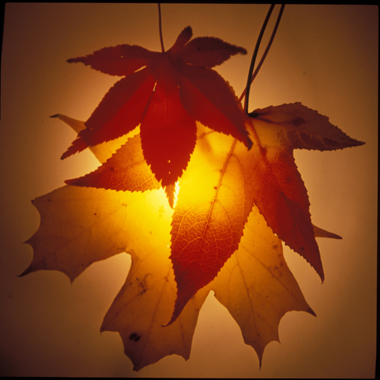
It's almost dark every evening when I leave from work; very dark by the time I get home. Where has all the sunlight gone? Finding some appreciation in the beautiful autumn foliage around me and loving the one hour of extra sleep I got this Sunday morning however gives me something to live for till spring. Till then what can I say but, “fall is here”!
With fall also comes high energy consumption for those extra-warm blooded individuals like me. So trying to make my peace with the falling leaves till spring gets here, here are some “money” and world saving tips to help you thru the chilly evenings.
- Setting your thermostat just a few degrees lower in fall and in the winter can translate to substantial savings on your utility bills
- Taking shorter showers saves water and the energy used to heat it. Plus, for the women, it dries out your skin a lot lesser!
- Washing clothes cold water consumes far less heating than necessary. Although this applies all the year round, in fall and winter it costs a lot more to give your whites that extra warm wash.
Tuesday, October 17, 2006
Not Just Horsin' Around

News on horse slaughter for food and export has been going around a lot lately; I was contacted by the US SPCA to vote on a bill that opposes the export of horse meat. That got me thinking, where do we as people draw the line on what is an acceptable meal and what’s not?
Am I not being biased when I eat Peking duck at P.F. Changs (yummy btw) and veal (cute in my opinion), but horse meat is beneath my righteous self? Or is it simply because I have a soft spot for Sea biscuit and secretly wanted to be a jockey growing up, before I realised I couldn't make the weight cut? Who am I to decide what is fit for consumption and what’s not?
That being said, and me continuing to be the selfish and biased person that I am, I researched and tried to find reasons to oppose horse slaughter by looking at it from the environmental perspective. Does it cause enough environmental harm to oppose it? (I do need a reason to post it to the blog too, right?).
Myth: Horse slaughter does not cause environmental harm.
Fact: The primary options to dispose of horse carcasses, other than processing at slaughter facilities, include burial, rendering, cremation, placement in a landfill, and composting. However, disposal regulations and methods are state and county issues, and they vary from locale to locale. Not all options are available to all horse owners in all areas, and the inevitable disposal of an additional 70,000 horse carcasses per year will create environmental problems.
Fact: Two out of three slaughter houses are in violation of current environmental law related to the disposal of blood and other waste materials.
Fact: Scavenger species can be killed by chemical agents in discarded tissues. Burial is not permitted in many areas, and chemicals can contaminate the soil. Other disposal methods, such as bio-digestors, show promise but are not yet readily available.
There I feel better already. My world saving tip for the day: Vote NO on horse slaughter.
Friday, October 06, 2006
The True Meaning of Pseudo
Lazy.
I've been horribly sluggish with my writing these last few weeks; no excuses acceptable.
I promise to be a lot more regular. The world doesn’t change with one post; nor did it with three.
With apologies from the lazy tree-hugging hippie.
I've been horribly sluggish with my writing these last few weeks; no excuses acceptable.
I promise to be a lot more regular. The world doesn’t change with one post; nor did it with three.
With apologies from the lazy tree-hugging hippie.
Friday, September 15, 2006
Medium-Well Please
Anyone who knows me would know that the last couple of weeks have been exceptionally hard on my stomach. My mother in law is visiting and she’s vegetarian. What this means to a devout carnivore like me is no cooking meat at home, no more take out and no more steak dinners with my friends.
Studies (I choose to ignore most of the time) show, that industrial meat production requires huge energy inputs and creates noxious waste. It takes far more fossil-fuel energy to produce and transport meat than to deliver equivalent amounts of protein from plant sources. The heavy use of carbon-rich fuels also contributes significantly to the emissions of global-warming gases.
Blah! Blah!
I guess what I’m trying to say is that; strict vegetarianism isn’t for everyone (definitely not me). I’ve been a little unhappy, but one less steak a week hasn’t killed me. Not yet anyway.
So, World Saving Tip #3: Replacing one meaty meal with a vegetarian meal, saves you money and possibly the world; one steak at a time.
Studies (I choose to ignore most of the time) show, that industrial meat production requires huge energy inputs and creates noxious waste. It takes far more fossil-fuel energy to produce and transport meat than to deliver equivalent amounts of protein from plant sources. The heavy use of carbon-rich fuels also contributes significantly to the emissions of global-warming gases.
Blah! Blah!
I guess what I’m trying to say is that; strict vegetarianism isn’t for everyone (definitely not me). I’ve been a little unhappy, but one less steak a week hasn’t killed me. Not yet anyway.
So, World Saving Tip #3: Replacing one meaty meal with a vegetarian meal, saves you money and possibly the world; one steak at a time.
Friday, September 08, 2006
Ah! The Bathroom Lights!
Three years ago, my best friend was living with me for a while. I came home from work one evening to an apartment in complete darkness. She had one tiny light on. She was saving electricity. When she did dishes, she washed plates under a trickle of water. She was conserving water. Well, my friend is an environmental engineer, ground water tester…umm something along those lines.
I don’t do it for the conservation. I enjoy dim lighting. If I’m home alone, I have one lamp on. I remember to turn off lights when I walk from one room to another. The bathroom in our town home came with a fancy 12 bulb lighting structure; I use the 2 bulb option. Not really to conserve anything, just 'cos I hate the glare of bright lights.
Quite the opposite, my husband wants everything lit like he’s picking lint off his shirt. We argue incessantly; mostly about bathroom lights. Now I have an excuse. I’m saving the world, one light bulb at a time.
I don’t do it for the conservation. I enjoy dim lighting. If I’m home alone, I have one lamp on. I remember to turn off lights when I walk from one room to another. The bathroom in our town home came with a fancy 12 bulb lighting structure; I use the 2 bulb option. Not really to conserve anything, just 'cos I hate the glare of bright lights.
Quite the opposite, my husband wants everything lit like he’s picking lint off his shirt. We argue incessantly; mostly about bathroom lights. Now I have an excuse. I’m saving the world, one light bulb at a time.

Random thoughts of an environmentalist that never was
I'm what ecologists would call a pseudo- environmentalist in a corporate world. I think about things like pollution and global warming. I occasionally have ideas and plans. And shortly after, the inspiration dies. What’s good an idea, if it isn't shared and if no one acts on it?
Truth is, like most busy professionals, I am too busy juggling work and home, planning dinner and thinking about what I need to do to get my next big raise. Most of my ‘save the world’ or ‘what’s my true calling’ thoughts have come to me while driving back home from work, mostly when I’m exhausted after a grueling day sitting at my desk and doing what I do best - working at my computer.
I keep myself happy by believing that I do my bit. I volunteer, occasionally toss that recyclable product in the right bin and carry my milk home without a plastic bag.
Should I be doing more? Does it really make a difference if I incorporate trivial changes in my daily life? One day at a time they say; but is that really enough? Could I, the lazy and busy pseudo- environmentalist really come through and go-green?
Truth is, like most busy professionals, I am too busy juggling work and home, planning dinner and thinking about what I need to do to get my next big raise. Most of my ‘save the world’ or ‘what’s my true calling’ thoughts have come to me while driving back home from work, mostly when I’m exhausted after a grueling day sitting at my desk and doing what I do best - working at my computer.
I keep myself happy by believing that I do my bit. I volunteer, occasionally toss that recyclable product in the right bin and carry my milk home without a plastic bag.
Should I be doing more? Does it really make a difference if I incorporate trivial changes in my daily life? One day at a time they say; but is that really enough? Could I, the lazy and busy pseudo- environmentalist really come through and go-green?
Subscribe to:
Posts (Atom)